

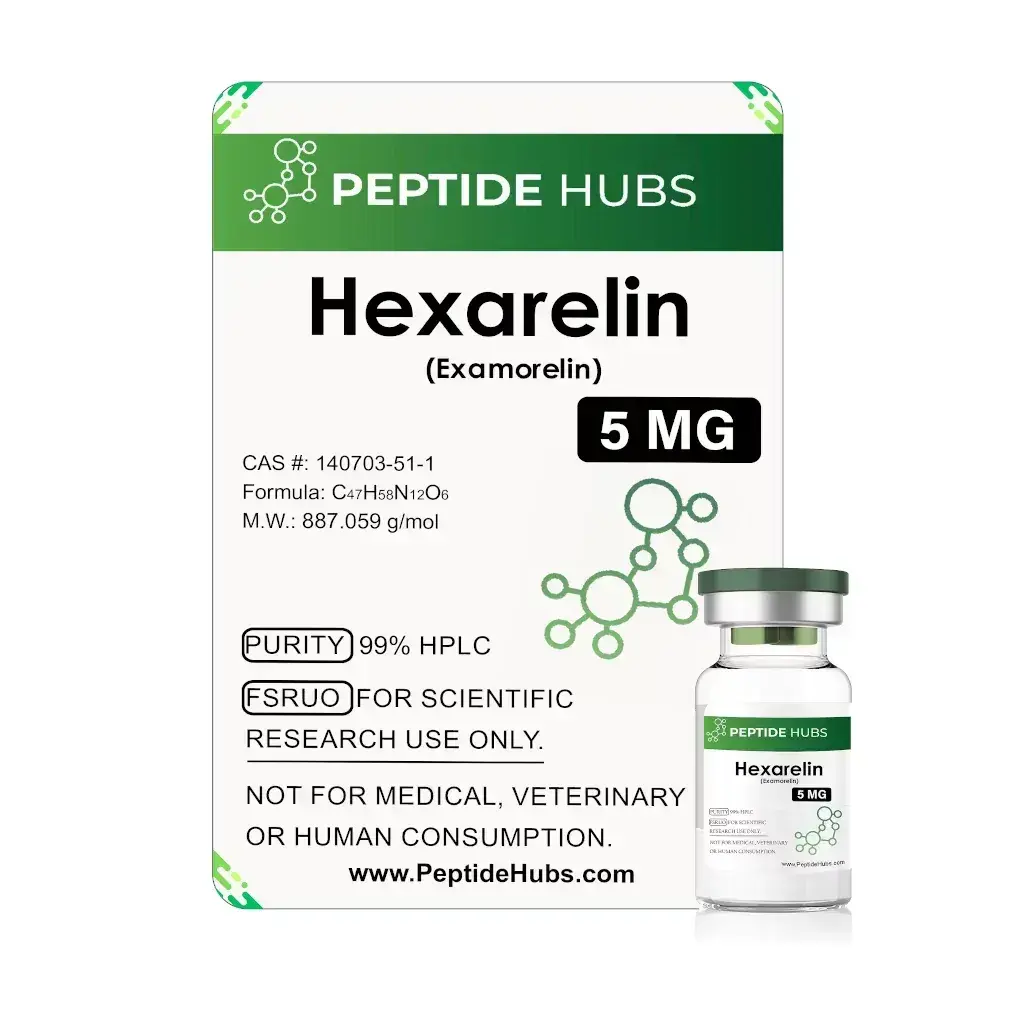
EXAMORELIN 5 MG
Category: Research Peptide
Package: 2 mL vial (5 mg/vial)
Form: Lyophilized Powder
Brand: Peptide Hubs
Purpose: Potent GHRP-6 analog for research on growth hormone release, muscle growth, and metabolic effects.
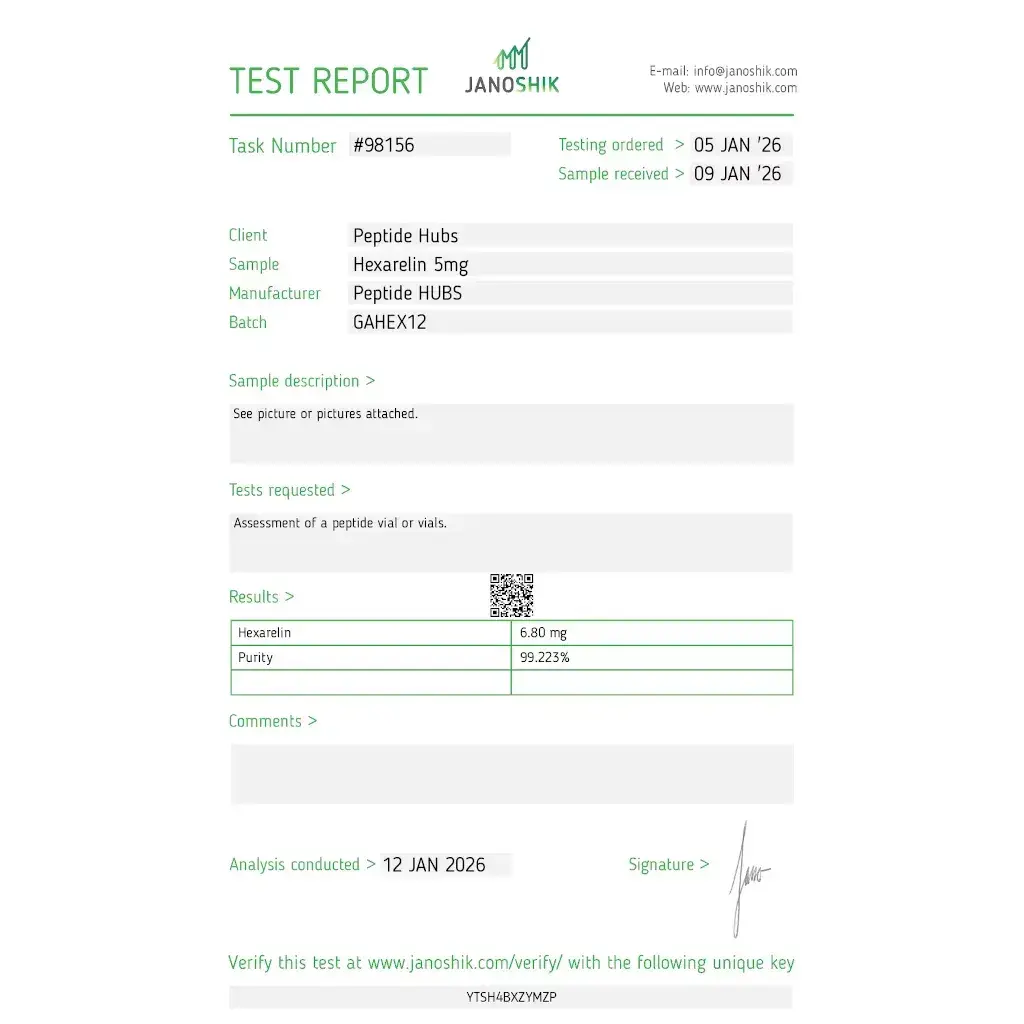
Laboratory Tested: View Results
Peptide Hubs presents Hexarelin 5 mg, a powerful synthetic hexapeptide and growth hormone-releasing peptide (GHRP) analog developed for advanced endocrinology and muscle physiology research. Also known as Examorelin, this innovative research peptide represents a significant advancement in growth hormone secretagogue technology, offering researchers a potent and selective tool for investigating growth hormone (GH) release mechanisms, pituitary function, and the downstream metabolic and anabolic effects of GH elevation. With its enhanced potency and extended duration of action compared to earlier GHRPs, Hexarelin serves as a sophisticated research model for studying somatotropic axis regulation and growth hormone-mediated physiological processes.
Each 2 mL vial contains 5 mg of high-purity Hexarelin (Examorelin) in lyophilized form. Hexarelin is a synthetic hexapeptide with amino acid sequence: His-D-2-methyl-Trp-Ala-Trp-D-Phe-Lys-NH₂. The specific structural modifications, including D-amino acid substitutions and methylation, confer enhanced metabolic stability, increased receptor binding affinity, and prolonged biological activity compared to native GHRP-6. Peptide Hubs' manufacturing process ensures batch-to-batch consistency with purity exceeding 99% as verified by HPLC and mass spectrometry analysis. The formulation contains no additional active ingredients, preservatives, or stabilizers that might interfere with experimental outcomes, allowing researchers to study the compound's effects with maximum precision and control.
Hexarelin is supplied as a sterile lyophilized powder in a 2 mL amber glass vial sealed with a bromobutyl rubber stopper and aluminum crimp seal. The specialized lyophilization process removes water while maintaining the peptide's conformational integrity and biological activity, ensuring long-term stability. The powder appears as a fine white to off-white crystalline substance that should dissolve completely in appropriate sterile solvents such as bacteriostatic water, sterile saline, or phosphate-buffered saline. The amber glass provides essential protection against light degradation, which is particularly important for peptides containing tryptophan residues that are sensitive to photodegradation.
Hexarelin belongs to the investigational growth hormone-releasing peptide (GHRP) class, specifically acting as a ghrelin receptor (GHS-R1a) agonist. While not assigned a formal ATC code for therapeutic use, it falls under investigational agents affecting the endocrine system (potential H01 category). The compound represents a potent research tool for studying growth hormone secretion, pituitary function, and the physiological effects of growth hormone elevation without the pulsatile variability of endogenous GH secretion.
Hexarelin exerts its research-observed effects through multiple interconnected mechanisms centered on growth hormone regulation and downstream metabolic effects:
FOR RESEARCH USE ONLY. NOT FOR HUMAN CONSUMPTION. In experimental models, Hexarelin has been investigated for potential applications in:
RESEARCH APPLICATIONS ONLY. Experimental protocols vary significantly based on model systems, administration routes, and research objectives. In published rodent studies investigating growth hormone effects, effective doses typically range from 10-100 μg/kg when administered via subcutaneous or intraperitoneal injection. For larger animal models, doses of 1-2 μg/kg are often effective. Due to its relatively short half-life (approximately 30-60 minutes in circulation), researchers typically administer Hexarelin once or twice daily in longitudinal studies, though some protocols utilize continuous infusion for sustained effects. The high concentration (5 mg/vial) allows for preparation of stock solutions that can be diluted for various experimental needs.
Reconstitution protocol: Using strict aseptic technique, add appropriate volume of sterile bacteriostatic water or physiological saline to the 5 mg vial. For a concentration of 2.5 mg/mL (ideal for precise dosing in animal studies), add 2 mL of solvent. For 1 mg/mL, add 5 mL. Gently swirl the vial until the powder completely dissolves into a clear, colorless solution. Avoid vigorous shaking or vortexing, which can cause denaturation or foaming. For research requiring repeated administration, aliquot reconstituted solution into single-use portions and store at -20°C or below to maintain stability. Avoid repeated freeze-thaw cycles to preserve peptide integrity.
In endocrinology and physiology research, Hexarelin may be combined with other compounds to investigate synergistic effects, complementary mechanisms, or pathway interactions. Researchers might examine Hexarelin alongside:
Stacking strategies should be carefully designed with consideration of administration timing, potential receptor interactions, and the specific research endpoints. Researchers should include appropriate controls to distinguish compound-specific effects from vehicle or procedural effects, and consider Hexarelin's potent growth hormone-releasing effects when planning combination studies that may produce synergistic or amplified hormonal responses.
As a research peptide that stimulates endogenous growth hormone secretion rather than providing exogenous hormones, Hexarelin does not produce the classic pituitary suppression associated with exogenous growth hormone administration. However, researchers conducting longitudinal studies should implement appropriate observation periods after discontinuation to monitor:
For studies examining significant growth hormone elevation, researchers might include gradual dose tapering rather than abrupt discontinuation to better understand adaptation mechanisms and potential withdrawal phenomena. No traditional SERM or AI-based post-cycle therapy is required or appropriate for Hexarelin research, though monitoring of glucose metabolism and other growth hormone-sensitive parameters during and after administration is recommended.
RESEARCH OBSERVATIONS ONLY. In experimental models, Hexarelin's side effect profile reflects its potent growth hormone-releasing and ghrelin receptor agonist properties. Commonly observed effects include transient increases in prolactin and cortisol (part of the normal stress hormone response to growth hormone secretagogues), mild to moderate increases in appetite, and potential fluid retention at higher doses. Unlike some growth hormone secretagogues, Hexarelin shows minimal effects on aldosterone, minimizing electrolyte disturbance risks. The peptide's potent growth hormone release can theoretically increase insulin resistance with prolonged high-dose administration, though this is typically transient and dose-dependent. No evidence of organ toxicity, mutagenicity, or carcinogenicity has been reported at research-relevant doses. Injection site reactions are typically mild and transient when proper administration techniques are used.
Hexarelin is contraindicated for human consumption. For research purposes, experimental designs involving models with active malignancies (particularly pituitary tumors or growth hormone-sensitive cancers), acromegaly, or severe uncontrolled diabetes should proceed with extreme caution and additional monitoring. Researchers should avoid using Hexarelin in studies where excessive appetite stimulation would compromise experimental outcomes or animal welfare. Models with pre-existing cardiac conditions may require modified protocols and careful monitoring due to Hexarelin's direct cardiac effects. Studies involving pregnant animal models require special consideration and appropriate ethical approvals due to growth hormone's role in fetal development and potential teratogenic concerns.
In research settings, doses significantly exceeding typical experimental ranges (10-20 times research concentrations) have produced exaggerated hormonal responses including excessive growth hormone elevation, pronounced hyperglycemia, marked increases in prolactin and cortisol, and potential fluid retention in animal models. Extreme overdose could theoretically lead to acute insulin resistance, electrolyte imbalances, or cardiovascular effects. Researchers should establish careful dose-response relationships and have appropriate veterinary care protocols in place for managing hormonal imbalances. No specific antidote exists for Hexarelin overdose; management would involve symptomatic treatment of hormonal effects, monitoring of glucose and electrolyte levels, and supportive care appropriate to the experimental system. Researchers should document all overdose incidents thoroughly for protocol refinement and scientific reporting.
Hexarelin is for laboratory research use only by qualified professionals. Researchers should:
In research models, Hexarelin may interact with other compounds affecting endocrine function, metabolism, or cardiovascular parameters. According to research in Journal of Endocrinology, growth hormone secretagogues like Hexarelin interact with:
Researchers should review literature on growth hormone secretagogue pharmacology when designing combination studies to anticipate potential interactions and optimize experimental design.
Each package contains one 2 mL amber glass vial with 5 mg of Hexarelin as lyophilized powder. The vial is sealed with a bromobutyl rubber stopper (compatible with peptide stability) and aluminum overseal to maintain sterility and prevent moisture ingress. Peptide Hubs packages each vial in individual protective boxes with desiccant packs, and light-blocking materials. Labels include product name, batch number, manufacturing date, expiration date (typically 24 months from manufacture when stored properly), amino acid sequence verification, purity certification, and "For Research Use Only" designation in compliance with research chemical standards. The 5 mg concentration provides flexibility for various research protocols while minimizing preparation requirements.
Store unopened vials at -20°C or below in original packaging protected from light. Lyophilized Hexarelin remains stable for 24 months when stored frozen at -20°C or colder. For short-term use (within 30 days), refrigerated storage at 2-8°C is acceptable but not optimal for maximum long-term stability. Avoid temperature fluctuations and exposure to humidity, which can degrade peptide integrity through hydrolysis or aggregation. After reconstitution, aliquoted solutions should be stored at -20°C to -80°C and used within 30 days, avoiding repeated freeze-thaw cycles. Always inspect reconstituted solutions for clarity, color, and absence of particles or precipitation before research use. The amber glass provides additional protection against light-induced degradation of tryptophan residues.
Peptide Hubs ships Hexarelin 5 mg to research facilities in the United States. All packages are discreetly labeled for research use only with appropriate documentation consistent with research chemical distribution. Domestic reshipping services ensure reliable delivery to all 50 states with real-time tracking provided. Researchers should verify institutional policies regarding receipt of research peptides. Typical delivery requires 5-10 business days with expedited options available for time-sensitive research protocols requiring consistent peptide supply.
Hexarelin is sold exclusively as a research chemical for laboratory investigation. It is not approved by the FDA for human use, diagnosis, or treatment of any condition. In the United States, possession and use are legal for qualified researchers and institutions when used in compliance with applicable laws governing research chemicals. Purchasers must be at least 18 years old, represent legitimate research entities (universities, research institutes, endocrinology laboratories), and agree to use the product exclusively for non-human research in controlled laboratory settings. Researchers must comply with all institutional, IACUC, state, and federal regulations governing animal research and chemical safety.
/
Peptide Hubs, USA

Hexarelin differs from GHRP-6 and other secretagogues in several key ways:
These differences make Hexarelin valuable for specific research applications requiring potent, sustained growth hormone elevation with particular hormonal profiles.
Hexarelin offers unique advantages for muscle and metabolism research:
These properties make Hexarelin ideal for studying exercise adaptation, muscle regeneration, metabolic optimization, and body composition changes.
Optimal research protocols typically involve:
The structural modifications in Hexarelin provide enhanced stability, but researchers should still follow proper peptide handling protocols including aseptic technique and appropriate storage.
Yes, Hexarelin is frequently studied in combination with other compounds to investigate synergistic effects on the growth hormone axis:
However, researchers should carefully design stacking protocols considering: administration timing, potential receptor interactions, synergistic hormonal effects, and appropriate controls. The potent GH-releasing effects of Hexarelin may amplify responses to other compounds, requiring dose adjustment in combination studies.
Peptide Hubs performs comprehensive quality verification on every batch of Hexarelin:
Each batch includes Certificate of Analysis with peptide-specific parameters including chromatographic purity, mass spec verification, and biological activity data for research documentation and protocol validation.
Please log in to write Hexarelin 5 mg review.
HEXARELIN 5 MG
Category: Potent Growth Hormone Secretagogue
Package: 2 mL vial (5 mg/vial)
Form: Lyophilized Powder
Brand: Dragon Pharma
Purpose: Stimulate powerful growth hormone release for muscle growth, fat loss, enhanced recovery, and cardiovascular benefits.
Laboratory Tested: View Result
SOMATROPIN (R-HGH) 100 IU
Category: Growth Hormone Analog
Package: 1 kit [10 Vials] (10 IUs/vial)
Form: Powder
Brand: Dragon Pharma, Europe
Purpose: Weight Loss / Cutting Cycle
Laboratory Tested: View Results
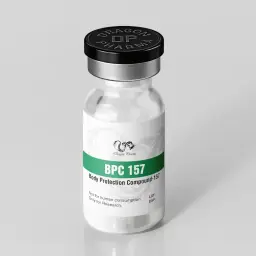
PENTADECAPEPTIDE 2 MG
Category: Human Peptide Hormone
Package: 2 mL Vial (2 mg/vial)
Form: Powder
Brand: Dragon Pharma
Purpose: N/A
Laboratory Tested: View Results
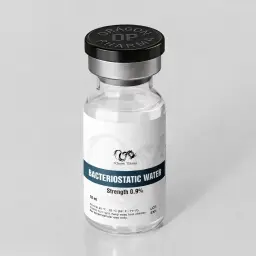
STERILE WATER 0.9%
Category: Water for Injection
Package: 10 mL Vial (0.9%/vial)
Brand: Dragon Pharma
Purpose: For mixing peptides
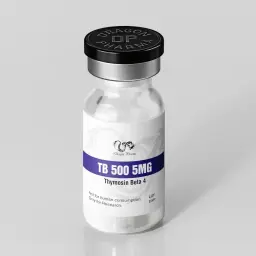
TB 500 5 MG
Category: Systemic Healing & Recovery Peptide
Package: 2 mL Vial (5 mg/vial)
Form: Lyophilized Powder for Injection
Brand: Dragon Pharma
Purpose: Accelerates healing of muscles, tendons, ligaments, and skin by promoting cell migration, angiogenesis, and reducing inflammation systemically.
Laboratory Tested: View Result